Savannah Drug Crime Lawyer
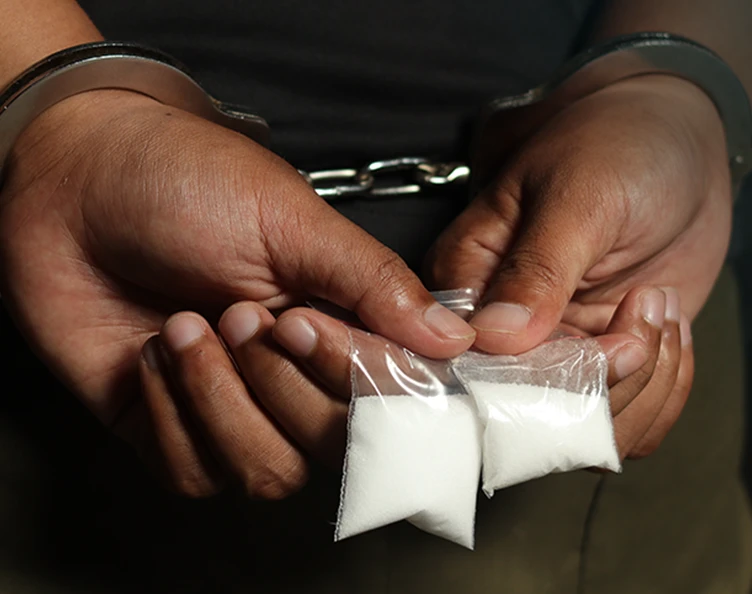

Being charged with a drug crime is a life-changing event. Legal representation is crucial from the moment of arrest to ensure your rights are protected throughout the criminal justice process. Drug crimes in Georgia are fairly common; however, they are frequently prosecuted severely, even when the person being convicted of the crime is an upstanding citizen who was caught possessing or selling a small amount of drugs.
There are serious consequences for drug crimes, including time in jail or prison, heavy fines, community service, court-ordered drug and alcohol counseling, and a permanent criminal record. If you find yourself facing these criminal charges, consulting with a Savannah drug crime lawyer at Jarrett Maillet J.D., PC, can help defend you against criminal charges, navigate the complexities of your case, and potentially reduce the penalties you might face. Immediate legal assistance is essential when facing drug-related criminal charges, as a skilled lawyer can provide critical support and guidance. Your lawyer will defend you throughout the entire criminal process, from arrest to resolution, ensuring your rights are protected at every stage.
Why Chatham County Drug Cases Require a Local Defense Attorney
Misdemeanor drug cases go to Chatham County State Court, while felony drug cases are typically sent to Chatham County Superior Court. Knowing which court will handle your case and understanding how each operates is something that comes from years of practicing in the Chatham County judicial system. Attorneys knowledgeable about local courts understand the tendencies of judges and prosecutors, which directly affects how a defense strategy is built and how plea offers are evaluated.
Jarrett Maillet has experience as a former prosecutor, which gives our clients a significant advantage. Understanding how the prosecution builds its case allows our legal team to anticipate arguments and challenge prosecution evidence more effectively. Local defense lawyers also help eligible clients use first-offender status or diversion programs that may not be obvious to someone unfamiliar with Chatham County courts.
The Five Schedules of Controlled Substances Under Georgia Law
Every state regulates the possession of controlled dangerous substances (CDS), though each differs in its definition of CDS and the penalties for their possession. In Georgia, controlled substances are also referred to as illegal substances under state law. Georgia classifies not only well-known drugs like marijuana, heroin, and cocaine as controlled substances, but also the compounds used to manufacture them. Georgia divides its CDS into five schedules according to their likelihood for abuse. (Georgia Code Section 16-13-25 through 16-13-29):
- Schedule I drugs (such as heroin) are those that have a high potential for abuse and have no accepted medical use.
- Schedule II drugs (such as opium and morphine) have a high potential for abuse, have an accepted medical use with severe restrictions, and their abuse has the potential for severe psychological and physical dependence.
- Schedule III drugs (such as anabolic steroids) have a potential for abuse less than Schedule I or II drugs, have an accepted medical use, and their abuse may lead to low or moderate physical dependence and high psychological dependence.
- Schedule IV drugs (such as diazepam) have a lower potential for abuse than Schedule III drugs, have an acceptable medical use, and their abuse may lead to limited psychological and physical dependence in relation to Schedule III drugs.
- Schedule V drugs have the lowest potential for abuse relative to Schedule IV CDS, have a currently accepted medical use, and have a limited risk of physical or psychological dependence relative to Schedule IV CDS. Schedule V drugs include medicines that contain very small amounts of specified narcotic drugs.
Marijuana possession is a specific criminal offense in Georgia, and the legal consequences for marijuana possession can differ from those for other illegal substances, depending on the quantity and circumstances involved.
Types of Drug Offenses We Handle in Savannah and Across Georgia
At Jarrett Maillet J.D., P.C., we represent people facing serious drug charges and drug-related offenses under both Georgia and federal drug crimes, including:
- Simple drug possession and possession for sale or distribution
- Drug trafficking, smuggling, or importation
- Unauthorized possession or sale of prescription drugs
- Heroin possession or manufacturing
- Cultivation of marijuana
- Money laundering
- Synthetic drug crimes
- Property crimes, such as burglary or larceny, to support a drug habit
- Conspiracy charges
- Juvenile or student drug offenses
- DUI involving drugs
We also represent clients facing serious charges such as homicide, domestic violence, and sex crimes. Our firm has extensive experience handling high-stakes criminal cases and is dedicated to providing a strategic defense for clients accused of these severe offenses.
Facing drug charges in school zones or near protected areas can add sentence enhancements that significantly increase jail time even for a first offense. Our drug offense lawyer team evaluates every factor, including the location of the alleged crime, to understand the full sentencing exposure you face. The type and quantity of controlled substance involved also significantly influences the severity of a drug charge and the potential penalties.
With potential jail sentences ranging from 2 to 15 years for certain possession charges and a statutory minimum of 10 to 40 years if you are convicted of trafficking, you need a strong and dependable Savannah drug crime attorney on your side. We build cases by thoroughly investigating the facts, gathering evidence, and developing strong legal arguments to defend our clients. We can explore all options for your defense, whether we negotiate with prosecutors or we aggressively fight in court. Our commitment is to protect your rights and your future throughout every stage of the legal process.
Fourth Amendment Violations and Illegal Searches in Drug Cases
Many drug cases hinge on Fourth Amendment violations related to searches and seizures. If law enforcement stopped your vehicle, searched your property, or detained you without probable cause or a valid warrant, any evidence gathered may be excludable from trial. Civil rights violations can lead to evidence being excluded from trials, which can result in charges being significantly reduced or dismissed entirely.
Defense lawyers assess the lawfulness of police traffic stops, detentions, and searches, reviewing police reports and the circumstances of the arrest to identify any constitutional violations. Attorneys scrutinize traffic stops, warrants, and detentions for Fourth Amendment violations as one of the first steps in building a defense. Defense lawyers also check the chain of custody for police or forensic errors, including whether lab results were properly handled and whether proper procedures were followed from the moment of the drug arrest to trial.
Our criminal defense team investigates every aspect of how evidence was gathered. If illegal search procedures were used, we file motions to have that evidence suppressed. Constitutional violations in drug cases are one of the most powerful tools a defense attorney can use to achieve a favorable outcome for the client.
Drug Court and Diversion Programs in Chatham County
Drug courts often combine judicial supervision with treatment and rehabilitation options, providing an alternative path for eligible defendants who are struggling with addiction. Drug court eligibility depends on the nature of the charges, the defendant’s criminal history, and whether the defendant is willing to participate in a structured program. Not everyone qualifies, but for those who do, drug court can be a path to avoiding a conviction and addressing the root causes of the charges.
Defense attorneys may guide first-time offenders toward accountability courts or conditional discharge programs under O.C.G.A. § 16-13-2, which can result in charges being dismissed without a conviction on the permanent record. These options matter because a drug conviction can affect background checks, professional licensing, and custody issues for years after the case is resolved. Our drug crime defense attorney team knows which programs are available in Chatham County and how to position clients to qualify.
Consequences of a Drug Conviction Beyond Jail Time
A drug conviction affects far more than just your sentence. Background checks for employment, housing applications, and professional licensing can all be affected by a drug conviction on your record. Professional licensing boards may deny or revoke licenses for healthcare workers, teachers, and others who are convicted of drug offenses, even for first-time offenders with otherwise clean records.
You have 30 days to contest a license suspension after a drug arrest under Georgia Driver Services rules, and missing that window can result in an automatic suspension of your driving privileges. Record restriction after a favorable outcome may be possible in some cases, but it is not available for all drug crimes, which is another reason to fight the charges rather than simply accepting a plea.
Aggressive Representation for Savannah Drug Crime Charges You Can Rely On
Our Savannah drug defense lawyers are litigators first, negotiators second. We don’t plead out cases because it is easier. Instead, we fight for our clients’ rights. Prosecutors know we aren’t afraid to try our clients’ cases in court.
If you have been charged with a drug crime, you need to seek the services of an experienced Savannah drug crimes attorney who knows the Georgia drug laws backwards and forwards. Our criminal defense attorneys in Savannah, GA have defended many drug crime charges and can help you get the charges against you reduced or dismissed entirely.
Minimizing mandatory minimum prison sentences can help avoid heavy felony records that impact future employment, custody issues, and other aspects of life long after a case is resolved. A drug conviction for a drug offense in Savannah or elsewhere in Georgia will leave you with a permanent criminal record and a possible prison sentence. Our proven results in Savannah drug cases come from combining deep knowledge of Georgia drug laws with an aggressive approach to challenging the prosecution’s case at every stage.
Navigating the Criminal Justice System in Savannah
Facing drug crime charges in Savannah, Georgia, can be overwhelming, especially given the complexity of the criminal justice system. Whether you are dealing with drug possession charges, allegations of drug trafficking, or accusations of drug manufacturing, the stakes are high. The consequences of a conviction can include lengthy prison sentences, substantial fines, and a permanent criminal record that can impact your future opportunities.
Drug cases in Savannah can range from misdemeanor to felony charges, depending on the type and quantity of the controlled substance involved. Possession of Schedule II drugs can result in harsh penalties and hefty fines, while drug trafficking charges or drug manufacturing charges can lead to even more severe consequences. Simple possession of small amounts may qualify for first-offender programs, while larger quantities and trafficking charges carry mandatory minimums that leave little room for judicial discretion.
In Chatham County, clients benefit from defense attorneys who are dedicated to defending their freedom and fighting for justice. Our attorneys have extensive experience handling drug-related charges and are well-versed in both state and federal court procedures. You should remain silent and request an attorney immediately after a drug arrest to protect your constitutional rights and preserve your best options going forward.
Frequently Asked Questions About Drug Crimes Defense in Savannah, GA
What is the difference between simple Possession and Possession with Intent to Distribute (PWID) in Chatham County?
The key difference between simple possession and possession with intent to distribute lies in whether the prosecution can prove a plan to sell, barter, or transport the controlled substance. While simple possession focuses strictly on having physical or constructive control of a drug for personal use, possession with intent to distribute is a much more severe felony offense. In Savannah, law enforcement and prosecutors look for circumstantial evidence to establish intent, including the total weight of the drugs, the presence of individual packaging materials like plastic baggies, digital scales, large amounts of cash, or incriminating text messages on mobile devices.
Does a drug arrest in Savannah automatically mean I will face mandatory minimum sentencing?
No, a drug arrest in Georgia does not automatically trigger a mandatory minimum prison sentence. Mandatory minimum sentences are legally reserved for specific high-level offenses, most notably drug trafficking charges that involve large, statutory weights of controlled substances such as cocaine, methamphetamine, or fentanyl. The specific minimum sentence is dictated strictly by the category and the precise weight of the seized substance. For lower-level possession or distribution charges, judges retain the legal discretion to sentence an individual to probation, drug court, or standard prison terms without a mandated minimum duration.
Can I still use the Georgia First Offender Act for a felony drug possession charge in Savannah?
Yes, individuals facing a first-time felony drug possession charge in Savannah may utilize the Georgia First Offender Act. This statutory framework allows a defendant to enter a plea and complete a sentence of probation or incarceration without a formal criminal conviction being recorded. If the individual successfully completes all the court-ordered conditions, the charges are officially discharged, and no conviction appears on their public criminal history. However, this option is generally unavailable for serious drug trafficking offenses or if the individual has prior felony records.
What is the Georgia Conditional Discharge statute for drug possession, and how does it differ from the First Offender Act?
Under O.C.G.A. § 16-13-2, the Conditional Discharge statute allows certain first-time drug possession offenders to have their charges completely dismissed without a conviction ever appearing on their permanent record. While both this statute and the First Offender Act result in no formal conviction upon successful completion, Conditional Discharge is specifically limited to drug possession offenses and can only be used once in a person’s lifetime. Conversely, the First Offender Act is broader and applies to various types of felonies, but using it for a minor drug charge prevents a person from using it later for a different type of offense.
What weight thresholds trigger a drug trafficking charge under Georgia law?
In Georgia, drug trafficking is charged based strictly on the total weight of the illegal substance seized, regardless of whether there is evidence of an actual sale. For cocaine and methamphetamine, the trafficking threshold begins at 28 grams, which carries a mandatory minimum prison sentence of 10 years. Under the Fentanyl Eradication and Removal Act, the threshold for fentanyl is exceptionally low, triggering a mandatory minimum sentence of 10 years for just 4 grams. For marijuana, trafficking charges apply when an individual is found in possession of more than 10 pounds.
Can multiple passengers in a vehicle be charged with possession of the same drugs in Savannah?
Yes, multiple individuals can be charged with possession of the same drugs under the legal doctrine of constructive possession and joint possession. If drugs are discovered in a vehicle, law enforcement does not need to find the substances physically on a person to make an arrest. If the state can prove that multiple passengers had knowledge of the drugs and the intent to maintain control over them, everyone in the vehicle can be charged. The equal access rule may be argued as a defense when drugs are in a common area where anyone could have placed them.
How can a drug crime attorney help me get charges dismissed or reduced?
A skilled drug crime defense attorney reviews every aspect of the prosecution’s case, including how evidence was gathered, whether probable cause existed for the stop or arrest, and whether constitutional violations occurred. Illegal search procedures, improper lab results handling, or chain of custody errors can all support motions to suppress evidence or have charges dismissed. In cases where dismissal is not possible, plea negotiations with prosecutors can sometimes reduce serious felony charges to misdemeanors or result in participation in drug court programs instead of prison time.
Contact Our Attorney Today
Many defensive strategies are available, and our attorneys are experts in representing individuals who were allegedly caught with illegal drugs. Our drug crime defense attorney team serves clients throughout Coastal Georgia, including Downtown Savannah and surrounding Chatham County communities. To schedule your confidential consultation, contact our office today at 912-713-3426. You will have the opportunity to review your case and your options with an experienced Savannah drug crime attorney.
Jarrett Maillet J.D., P.C.
Professional.
Trustworthy.
Honest.